Can these medicines help asthma symptoms?
Quick answer
Weight-management medicines are not asthma treatments, although weight reduction may help breathing or asthma control in some people with obesity. Evidence of a direct effect on asthma is not established; continue prescribed inhalers and follow your asthma action plan.
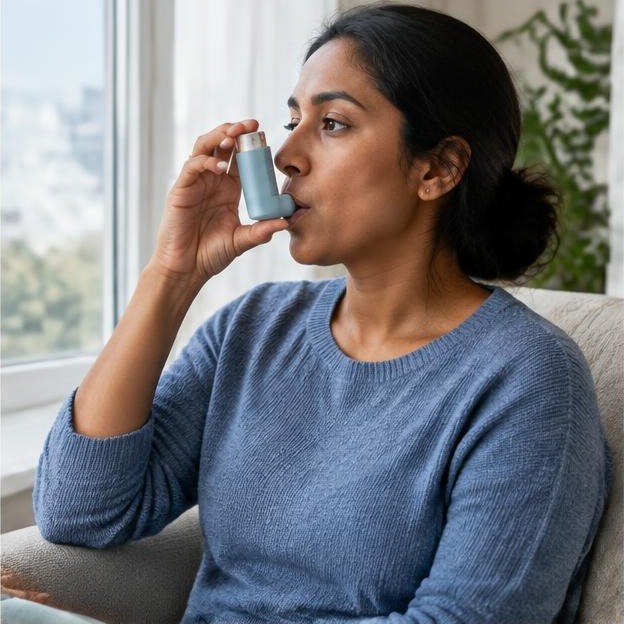
Weight-management medicines may improve breathing and possibly asthma outcomes in some people with obesity, but they are not established asthma treatments. Early research is encouraging, yet cannot show that these medicines directly control airway inflammation. Keep using prescribed inhalers and your asthma action plan; never use a weight-management injection to treat an attack.
Why might obesity and asthma overlap?
Asthma causes narrowing and inflammation, or swelling, in the breathing tubes. Obesity can affect breathing mechanics and may coexist with reflux, sleep apnoea and reduced exercise tolerance. These can add to breathlessness without every symptom being caused by asthma. A respiratory assessment helps separate these contributors.
Weight management can form one part of care when appropriate, but asthma occurs at every body size. Symptoms are not evidence of personal failure and should not be dismissed until weight changes.
How might these medicines help?
Wegovy and Ozempic contain semaglutide, which mimics glucagon-like peptide-1 (GLP-1), a gut hormone involved in appetite and glucose regulation. Mounjaro contains tirzepatide, which acts on GLP-1 and a second gut-hormone pathway called glucose-dependent insulinotropic polypeptide (GIP). Their product licences and doses differ.
Weight reduction may reduce the physical load on breathing and improve some related conditions. Laboratory and animal research also suggests possible effects on lung inflammation. Finding a biological pathway does not prove meaningful asthma control in people, and findings about one medicine cannot automatically be applied to all of them.
What does the human evidence show?
Some observational studies report fewer asthma exacerbations, meaning episodes when symptoms worsen, among people receiving GLP-1 medicines. However, people receiving different diabetes treatments may differ in many other ways. These studies cannot reliably separate a direct drug effect from weight change, glucose control or differences in care. A recent systematic review describes promising but inconsistent observational findings and limited direct measures of asthma control.
A separate analysis of diabetes and obesity trials did not find a statistically clear overall reduction in newly reported asthma events. That is not the same as a trial designed to treat established asthma. Dedicated clinical trials are needed before promising an asthma benefit.
What does this mean for your treatment?
Do not start these medicines solely for asthma on the strength of preliminary findings. If a medicine is appropriate for obesity or diabetes, discuss how to monitor both metabolic health and breathing. Keep taking your prescribed preventer or combination inhaler, check inhaler technique and maintain your written asthma action plan. Only your asthma clinician should change inhaled treatment.
More frequent reliever use, night waking or reduced activity means asthma needs review, even if weight is falling. Nausea or reflux during treatment can complicate symptoms; new breathlessness should never automatically be blamed on weight or medication.
When is breathlessness an emergency?
For an asthma attack, sit upright, use your prescribed reliever according to your personal action plan and seek help. Call 999 if symptoms worsen, the maximum reliever dose in your plan does not help, you have no inhaler during an attack, or you are struggling to speak or breathe. Do not wait for a weight-management appointment.
Sudden breathing difficulty with tongue or throat swelling after an injection could be a serious allergic reaction: call 999 immediately. A weight-management medicine cannot open the airways quickly and is never a rescue treatment.
Sources & further reading

Reviewed by
Dr Chinnadorai Rajeswaran
Specialist Endocrinologist · MBBS MRCP FRCP
Last Reviewed: November 2026
Read about medication and related care.
Related insights

Weight Regain After GLP-1 Treatment: Why It Happens
Weight regain after stopping GLP-1 treatment is common because appetite and weight-regulating biology persist, though individual responses differ. Discuss a long-term plan with the prescriber before stopping or restarting, and do not alter doses independently.

Foundayo (Orforglipron): What a Daily Tablet Changes
Foundayo is a once-daily orforglipron tablet licensed in the UK, offering an oral route without the fasting routine required for oral semaglutide. Taking a tablet rather than an injection does not remove the need for a doctor to assess suitability, monitor side effects and review ongoing treatment.

Oral or Injectable GLP-1: How We Choose a Route
Oral and injectable GLP-1 medicines differ in absorption, dosing, evidence, and practical considerations; neither route is automatically best for everyone. A prescriber should choose based on the specific product, medical history, preferences, and local approval, with instructions followed exactly.