Saxenda or Ozempic — what's the difference?
Quick answer
Saxenda contains liraglutide and is used for weight management, while Ozempic contains semaglutide and is licensed for type 2 diabetes; they are different medicines with different dosing schedules. They should not be combined or substituted without a prescriber, and the appropriate option depends on indication, health history and local eligibility.
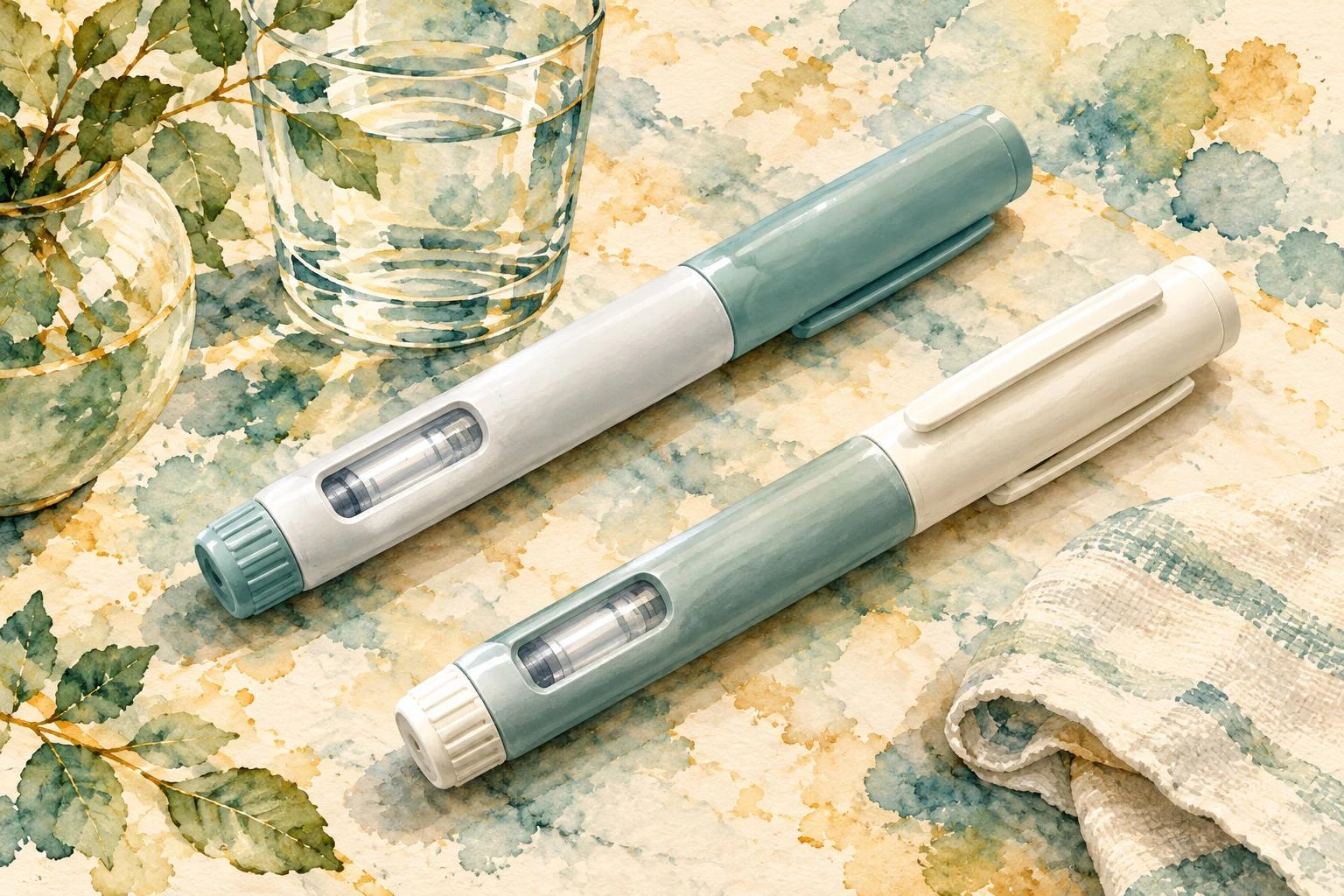
Saxenda and Ozempic contain different medicines and have different UK licences. Saxenda contains liraglutide and is licensed for weight management in eligible people; Ozempic contains semaglutide and is licensed for type 2 diabetes, not weight management. They are not interchangeable, and any change needs a prescriber’s plan.
How do the medicines work?
Both act on glucagon-like peptide-1 (GLP-1), a hormone involved in appetite and blood sugar regulation. They can reduce hunger, increase fullness and affect how quickly the stomach empties. They also help the body release insulin when blood sugar is raised. Their shared drug family does not mean their doses, pens or licensed uses are the same.
Saxenda is injected under the skin every day. Ozempic is injected weekly because semaglutide stays active longer. Both require a prescribed starting schedule rather than beginning at a higher dose.
Which medicine is licensed for weight management?
Saxenda is licensed alongside dietary changes and physical activity for adults with obesity, or overweight with a weight-related health condition, who meet its criteria. Body mass index (BMI) is a measure relating weight to height; it forms part of assessment but does not describe your whole health. The licence also includes certain younger patients, whose care needs an age-appropriate specialist assessment.
Ozempic’s UK licence is for type 2 diabetes. A medicine used outside its licence is described as off-label. Off-label prescribing requires a clinician’s justification and discussion; it does not make Ozempic a licensed weight-management product.
Wegovy also contains semaglutide, but has a weight-management licence for eligible people. Ozempic and Wegovy should not be treated as equivalent products simply because they share an ingredient. NHS eligibility and service requirements may also be narrower than a medicine’s licence.
Can you change from one injection to another?
A clinician may consider a change because of your treatment goals, side effects, response or health conditions. There is no simple milligram-for-milligram conversion. Do not overlap Saxenda with Ozempic, Wegovy or another GLP-1 medicine, use someone else’s pen, or improvise a dose using pen clicks.
Ask for written instructions covering the last dose of your current medicine, when to start the replacement and how it will be increased. Restarting after a gap may also need a different plan.
What safety issues should you discuss?
Nausea, vomiting, diarrhoea and constipation can occur with either medicine. Persistent vomiting can cause dehydration and needs advice. Tell your prescriber about previous pancreatitis, gallbladder problems, significant digestive symptoms, diabetes eye disease and all other medicines. Insulin or some diabetes tablets may need adjustment to reduce low blood sugar risk.
Severe, persistent abdominal pain, particularly if it spreads to the back, needs urgent medical assessment because it may indicate pancreatitis, inflammation of the pancreas. Do not take further doses while seeking urgent advice for suspected pancreatitis. These medicines should not be used in pregnancy; discuss contraception and pregnancy plans before treatment.
What should guide the decision?
The right question is which licensed treatment fits your health needs safely, not which brand sounds stronger. Your diabetes care, nutrition, tolerability and follow-up plan all matter. Needing a different approach is not a personal failure.
Sources & further reading

Reviewed by
Dr Chinnadorai Rajeswaran
Specialist Endocrinologist · MBBS MRCP FRCP
Last Reviewed: November 2026
Read about complex severe obesity and related care.
Related insights

Weight Regain After GLP-1 Treatment: Why It Happens
Weight regain after stopping GLP-1 treatment is common because appetite and weight-regulating biology persist, though individual responses differ. Discuss a long-term plan with the prescriber before stopping or restarting, and do not alter doses independently.

Foundayo (Orforglipron): What a Daily Tablet Changes
Foundayo is a once-daily orforglipron tablet licensed in the UK, offering an oral route without the fasting routine required for oral semaglutide. Taking a tablet rather than an injection does not remove the need for a doctor to assess suitability, monitor side effects and review ongoing treatment.

Oral or Injectable GLP-1: How We Choose a Route
Oral and injectable GLP-1 medicines differ in absorption, dosing, evidence, and practical considerations; neither route is automatically best for everyone. A prescriber should choose based on the specific product, medical history, preferences, and local approval, with instructions followed exactly.