Why Waist Size Tells You More Than the Scale Does for Men
Quick answer
Fat stored around the abdominal organs is metabolically more active than fat under the skin, and waist-to-height ratio captures it better than weight or BMI alone; NICE advises adults with a BMI under 35 to keep their waist to less than half their height. Measure your waist alongside weight rather than relying on the scale, and treat a raised ratio as a reason for assessment — blood pressure, glucose and lipids — not as a diagnosis in itself. If measuring your body causes distress, risk can be assessed through blood tests instead.
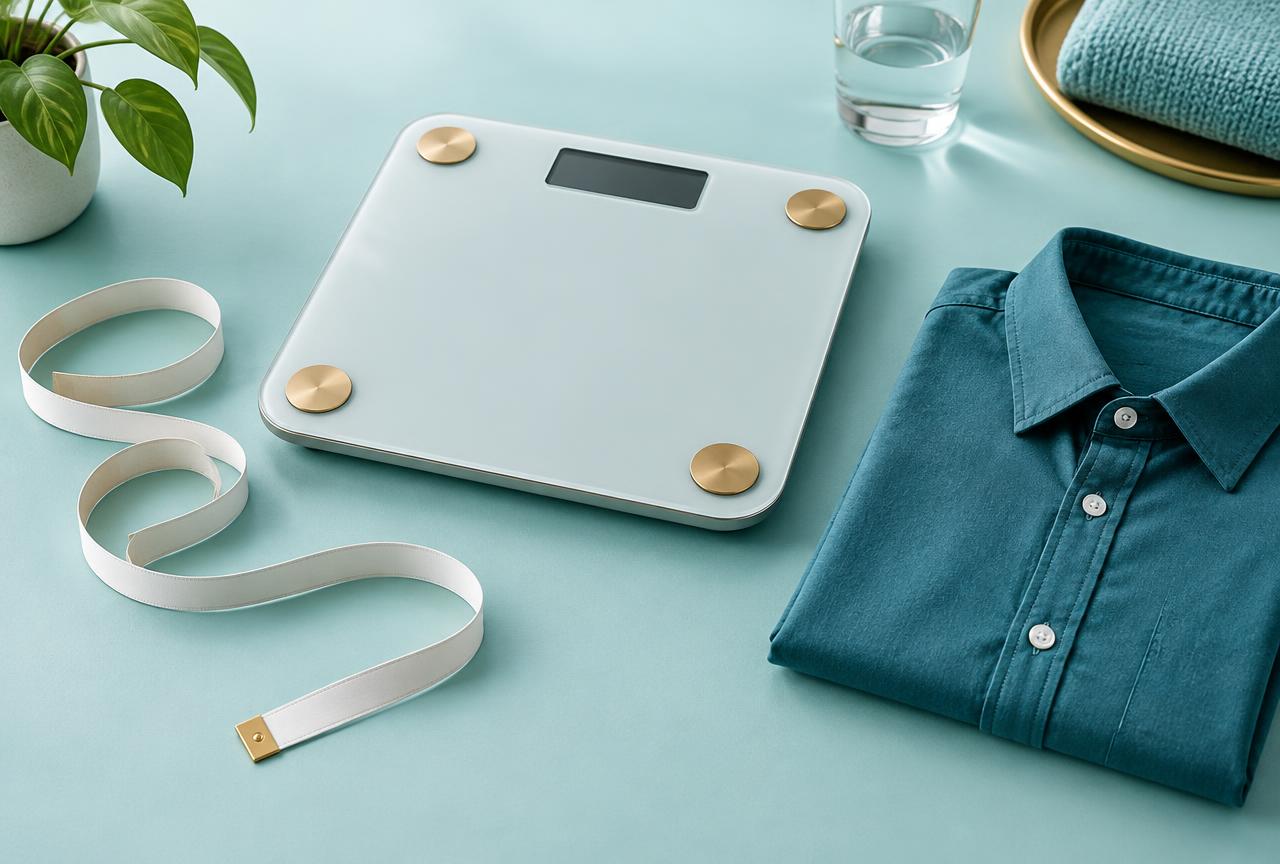
Most men who want to know whether their weight is a problem stand on a scale. It is the measurement they have, it is quick, and it produces a number that moves. The trouble is that it tells you how much there is and nothing about where it is — and for metabolic risk, where matters a great deal.
Fat stored around the abdominal organs behaves differently from fat stored under the skin. Measuring the waist is an attempt to capture that difference with a tape measure, and current UK guidance recommends it alongside BMI rather than instead of it. Used properly it adds information. Used carelessly it becomes another number to feel bad about, which is not the point.
What follows is what the measurement does and does not establish, and what the UK thresholds actually are — because they are frequently misquoted.
Why visceral fat behaves differently
Visceral adipose tissue sits within the abdomen around the internal organs; subcutaneous adipose tissue lies beneath the skin. A review of the structural and functional differences describes visceral tissue as more cellular, more vascular and more innervated, containing more inflammatory and immune cells, with larger adipocytes that are more metabolically active, more prone to lipolysis and more insulin-resistant. It releases more free fatty acids, and the same review notes that visceral fat carries a greater prediction of mortality than subcutaneous fat.
That is tissue-level evidence and the mechanisms are not fully settled. The honest summary is that visceral fat is associated with insulin resistance, dyslipidaemia and cardiometabolic disease more strongly than subcutaneous fat — not that it has been shown to cause all of it.
What the tape measure actually measures
A waist circumference is a proxy for central adiposity, not a direct measurement of visceral fat. NICE gives a standard technique: find the bottom of the ribs and the top of the hips, wrap the tape around the waist midway between those points, and breathe out naturally before measuring. Waist and height are measured in the same units.
Two caveats come from the international consensus statement on waist circumference. There is no single globally agreed protocol, so consistency over time matters more than which one you pick. And self-measured waists agree reasonably well with clinician measurements but are typically underestimated by one to three centimetres.
The UK thresholds, precisely
NICE guideline NG246 is the current reference. In adults with a BMI below 35 it recommends measuring and using waist-to-height ratio, with three categories:
- 0.4 to 0.49: healthy central adiposity, indicating no increased health risks
- 0.5 to 0.59: increased central adiposity, indicating increased health risks
- 0.6 or more: high central adiposity, indicating further increased health risks
The practical version is to keep your waist to less than half your height. NICE states these classifications can be used for people of both sexes and all ethnicities with a BMI under 35. The NHS calculator also excludes pregnancy, children under five, people with a known or suspected eating disorder, and people with a growth or other condition affecting height.
Where ethnicity comes in — and where it does not
This is commonly misreported. NG246 does not set ethnicity-specific waist circumference thresholds. It applies one set of waist-to-height ratio categories to all ethnicities and adjusts BMI instead: for people from South Asian, Chinese, other Asian, Middle Eastern, Black African or African-Caribbean backgrounds, overweight is a BMI of 23 to 27.4 and obesity a BMI of 27.5 or above, against 25 and 30 in the general classification.
Absolute waist numbers in centimetres do appear elsewhere — British Society for Sexual Medicine guidance uses a waist above 102 cm as one trigger for testosterone screening in men — but these come from other guidance and international definitions, not NG246. The international consensus statement is candid about them, observing that the single thresholds in common use were derived as stand-ins for BMI rather than from risk data, and proposing BMI-specific thresholds that still require validation across ethnic groups.
Why BMI misses this
BMI relates weight to height and cannot distinguish muscle from fat, as the NHS states directly. It also cannot see distribution. A longitudinal study of more than 7,000 men aged 20 to 96 found that fat mass rose from age 20 while fat-free mass increased only until about age 47 and then declined — and that BMI and body fat percentage tracked the rise in fat but missed the loss of fat-free mass.
The consensus statement adds the clinical consequence: waist circumference is associated with mortality within every BMI category, the association is strongest after adjusting for BMI, and waist provides independent and additive information for predicting illness and death.
Why the scale can stay still while things change
If fat is lost and lean tissue gained, body weight can be unchanged while body composition is not. Waist picks up part of that; the scale does not. The consensus statement reports that diet or exercise interventions reduce waist circumference by around five centimetres on average, and that these reductions occur with or without weight loss — exercise can reduce visceral fat even when body weight does not change. That is a reason to record a waist measurement at the start of treatment rather than three months in.
What to do with the number
A raised waist-to-height ratio is a risk indicator, not a diagnosis. The consensus statement is careful here too, noting that waist circumference has not yet been shown to improve established cardiovascular risk scores. What it should prompt is assessment: blood pressure, HbA1c, lipids, liver function, and a conversation about family history, sleep, alcohol and medicines.
It may also be the wrong measurement for a particular person. Abdominal swelling from other causes makes a waist reading misleading, and for anyone who finds measuring distressing there is no obligation to do it — risk can be assessed through blood tests and blood pressure instead.
One number is not enough. The second costs the price of a tape measure.
Sources & further reading
- NICE NG246: identifying and assessing overweight, obesity and central adiposity
- NHS: calculate your waist-to-height ratio
- NHS: overweight and obesity in adults
- Waist circumference as a vital sign in clinical practice: IAS/ICCR consensus statement, Nature Reviews Endocrinology 2020
- Subcutaneous and visceral adipose tissue: structural and functional differences, Obesity Reviews 2010

Reviewed by
Dr Chinnadorai Rajeswaran
Specialist Endocrinologist · MBBS MRCP FRCP
Last Reviewed: November 2026
Read about complex severe obesity and related care.
Related insights

Erectile Dysfunction as a Metabolic Warning Sign
Erectile dysfunction can be related to diabetes, high blood pressure, vascular disease, hormonal issues, medicines, or psychological factors, and sometimes precedes cardiovascular symptoms. Arrange a medical assessment rather than assuming it is only a sexual problem; seek urgent care for chest pain or sudden neurological symptoms.
Does carrying extra weight lower testosterone?
Higher body fat is associated with lower testosterone in some men, but weight is only one possible factor and symptoms alone cannot diagnose deficiency. Testing and interpretation require clinical assessment; do not use testosterone without medical advice, particularly if fertility matters.

“It's Just Age”: When Tiredness in Men Deserves a Proper Look
Tiredness with low mood, reduced libido and weight gain can be caused by thyroid disease, type 2 diabetes, sleep apnoea, iron or vitamin D deficiency, depression, medicines or genuine testosterone deficiency, and more than one often applies. Ask for an assessment with blood tests rather than accepting ageing as the explanation or assuming testosterone is the answer; replacement is not a treatment for tiredness when levels are normal. Seek prompt advice if you are falling asleep while driving, or if tiredness comes with unexplained weight loss.