
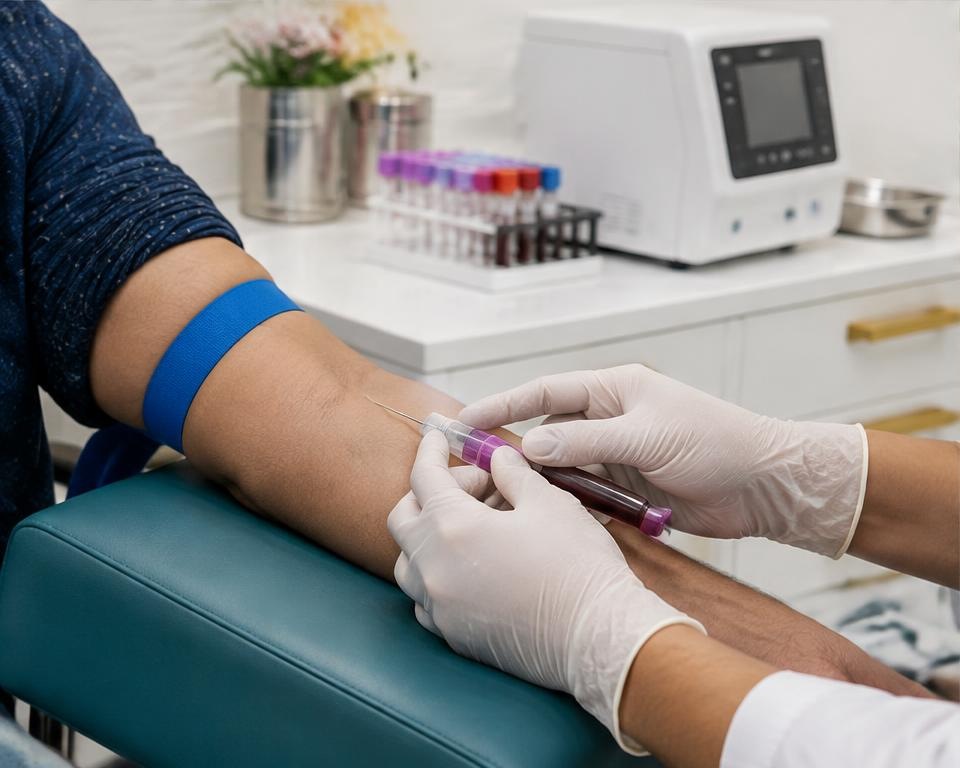
Master Metabolic Health Checkup
A joined-up assessment for diabetes and weight concerns, bringing clinical review, investigations and nutritional guidance together.
Explore assessment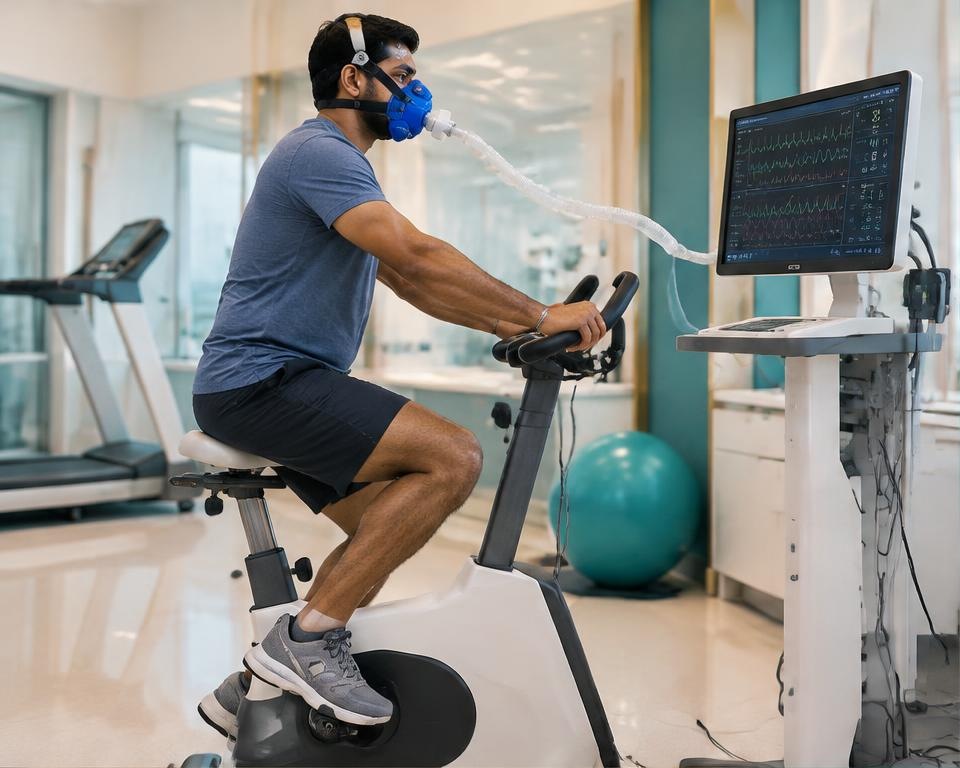
An exercise-based assessment of oxygen uptake and cardiorespiratory fitness, with suitability checked first.
An exercise test is most useful when its findings guide safe activity. Your symptoms, current fitness and health history shape both the testing and the advice afterwards.
VO₂ max testing assesses oxygen use during progressively increasing exercise.
VO₂ max testing assesses oxygen use during progressively increasing exercise. The information may help the team understand cardiorespiratory fitness and discuss an individual approach to activity.
You exercise on a treadmill or stationary bike while wearing a mask connected to equipment measuring oxygen uptake and carbon dioxide output. The team explains the test, increases activity gradually and monitors your response.
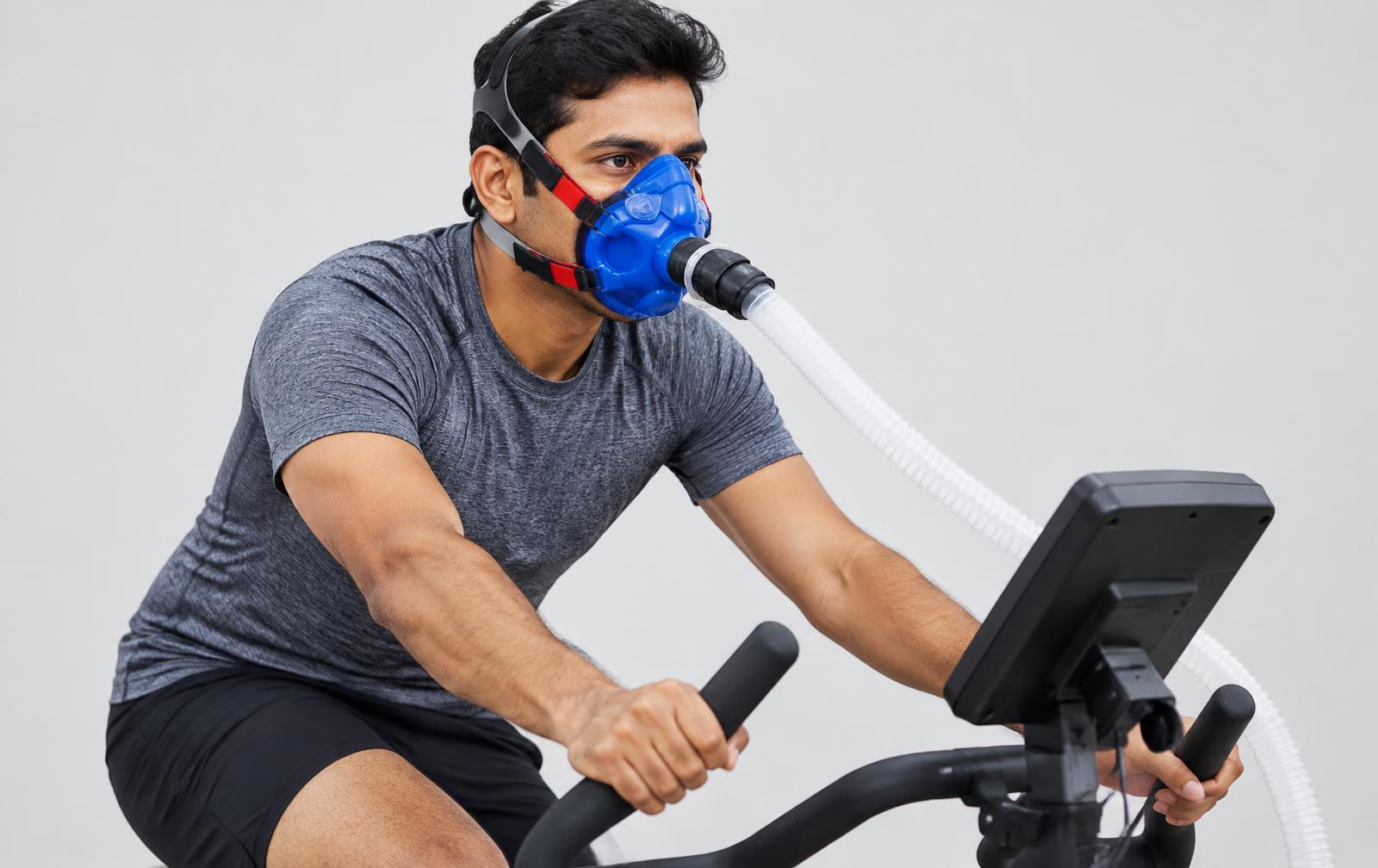
Exercise testing can be strenuous. Share your medical history, symptoms and activity limitations beforehand. The clinic notes risks including fatigue, dizziness, breathing difficulties, injury and cardiac events; clinical suitability and supervision are essential.
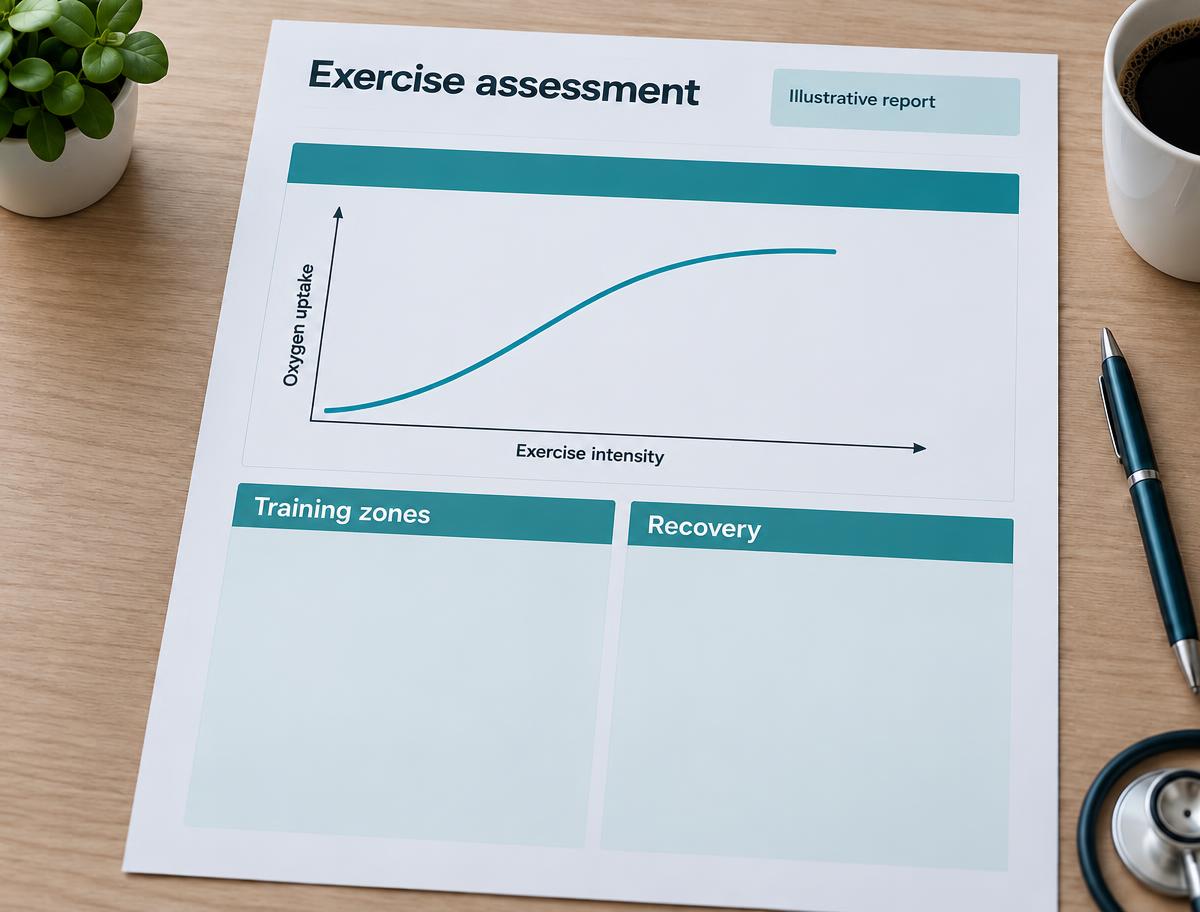
VO₂ max describes the highest oxygen uptake reached during strenuous exercise. A fitted mask measures oxygen and carbon dioxide as you exercise on a bike or treadmill. The result adds information about cardiorespiratory fitness and endurance; it is interpreted with your health history.
The team records resting heart rate, blood pressure, height and weight, then guides a warm-up. Exercise starts gently and the workload rises in stages while gas measurements and symptoms are monitored. It finishes at maximum tolerated effort or earlier for safety, followed by a cool-down.
Results can help set training zones using heart rate, speed or power, identify areas to work on and review whether exercise is effective. Gas analysis can estimate energy use through indirect calorimetry; nutritional advice needs the wider clinical picture rather than a test alone.
Because the test can approach maximum effort, suitability is checked in advance. Fatigue, muscle soreness, dizziness, light-headedness, breathing difficulties and injuries are possible, with uncommon but potentially serious cardiac events. Tell the team about symptoms, heart or lung conditions and activity limitations; testing can be stopped when needed.
Talk to our Chennai team about VO₂ Max Testing. Your suitability, care and cost are explained before you decide.
Flat B1, First Floor, 14 Dr. Nair Road · T. Nagar, Chennai 600017
A joined-up assessment for diabetes and weight concerns, bringing clinical review, investigations and nutritional guidance together.
Explore assessment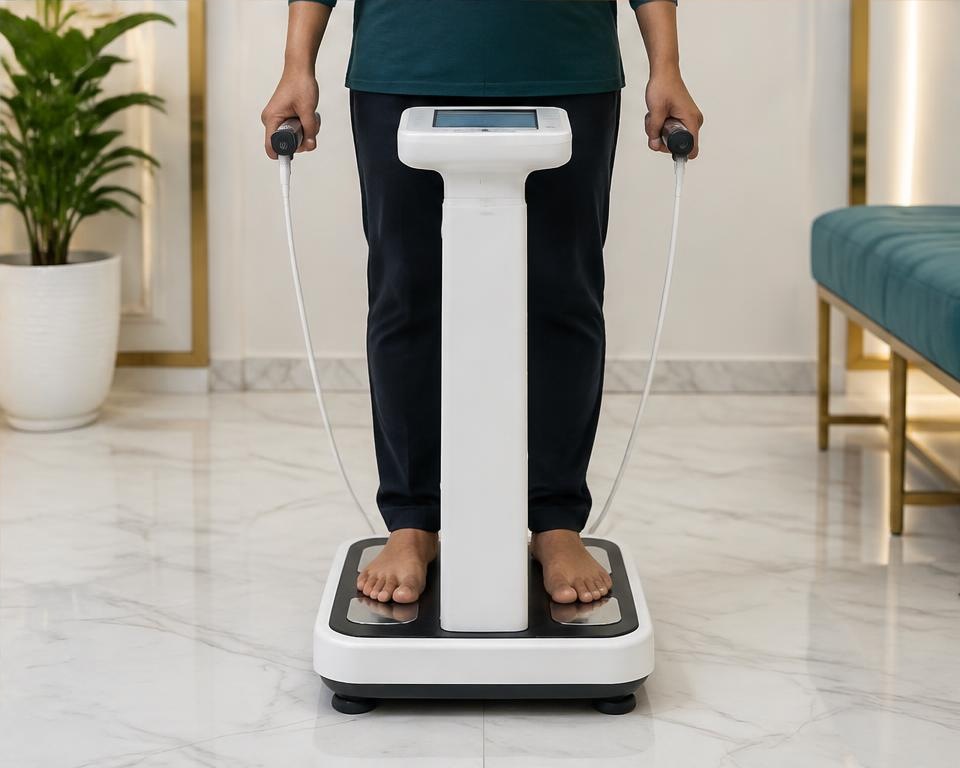
Look beyond body weight to consider fat, muscle and body water as part of a wider clinical assessment.
Explore assessment
Investigate sleep-related concerns with overnight monitoring and clinical interpretation of the results.
Explore assessment